
From a craft built on recollection to one built on evidence
Therapy supervision still runs on memory. The recording has long been the gold standard and stayed rare, because the friction of consent, storage and the hours of review was never resolved. psylab takes that friction away and turns the recording into structured reflection the clinician controls.
Who we’re building it with
psylab is built with practising clinicians, and with a leading psychotherapy researcher as our clinical advisor. We have early clinical users in Norway and abroad, and a research collaboration with a psychotherapy quality lab.
Confidentiality by design
The reason almost nobody kept a recording is a good one, so it was the first thing we had to design for. psylab never asks who your client is. It doesn’t ask for a name, a date of birth or a personal number, because nothing in it needs them. A case has a title you choose, and we ask you to make it one that means something to you and nothing to anyone else.
What was said in the room is pseudonymised on its way in. Names, places, dates and the details that would point to a person are replaced, and the clinical meaning stays. It isn’t a setting, and there’s no version of psylab without it. The note, the feedback and anything you ask about a session are written from that text, so nothing after that step sees the original. We say pseudonymised rather than anonymised on purpose: it makes a client much harder to recognise, and we’d rather not claim more than that.
The recording itself isn’t kept. Audio is transcribed and then let go, and only the pseudonymised transcript stays. If you keep the audio so a supervisor can hear a session, the voice is changed first, and the original is deleted. That is what makes it safe to study your own work here, and to let AI help you with it: what’s on the page is the session, without the details that would identify a person.
Backing this
We’d like to hear from clinicians, researchers, and people who simply want psychology to have this. The amounts are small and the terms are ours. We answer to the clinicians who use psylab, and that is the company you’d own a piece of.
We can’t tell you what that piece will be worth. If you want a part in it anyway, tell us who you are and why this interests you.
Who we answer to
psylab is built by a small company in Oslo that hasn’t taken venture money. Raising tends to mean owing someone a rate of growth, and what a company owes shows up in the product: the price creeps up, and your data starts to look like an asset. We want to owe the people who use this.
So far psylab has been paid for out of our own pockets. From early access on, we want it paid for by the clinicians who use it, at one price for every therapist, held for the people already paying it. A few of them may come to own a small piece of the company. Nothing here depends on hitting a number by the end of a quarter.
We’re doing this because we think the quality of mental health care can go up, and that it starts with therapists being able to look at their own work. We also think AI can be used well here, on the clinician’s side, if the people building it are careful about what it’s for. psylab is our attempt to be careful.
If there’s something here you’d like to ask about, or hold us to, write to Kristian.
kristian@psylab.ai- We don’t train models on your data.
- We haven’t taken venture money, and we’re not raising a round.
- We answer to the clinicians who use psylab.
- We’d rather keep the quality high and the price fair than grow fast.
- If any of this changes, this is where we’ll say so.
Start a conversation.
We’re not raising a round, and we’d still like to meet the people who want this to exist.
Hear it from us in person
This autumn you can hear from us in person, and bring the hard questions with you.
Utvikling av verktøy – KI i personlighetsforstyrrelser. Kan KI gi bedre tilbakemeldinger enn en ekspert i mentaliseringsbasert terapi (MBT)?
Building tools: AI in personality disorders. Can AI give better feedback than an MBT expert?
Personlighetsforstyrrelser, Faglig ForumQuality Hotel Expo · Fornebu, OsloIn Norwegian Hieu Tran NgocCo-founder, CCO
Who you’d be trusting with your sessions
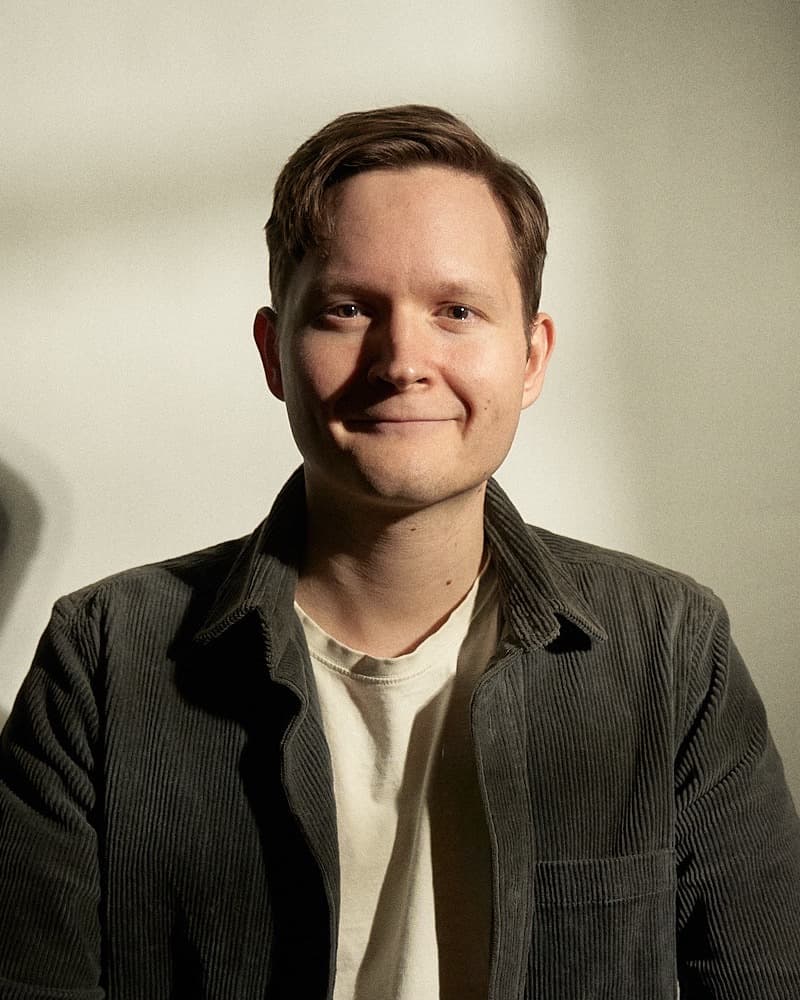 Kristian S. MunkvoldFounder, CEO / CTO
Engineer turned founder, building the clinical infrastructure he thinks psychotherapy has been missing. His job is to make the software as careful as the people who use it.
 Hieu Tran NgocCo-founder, CCO
Clinical psychologist who has worked in specialist health services and in private practice. Keeps asking how each part of the platform will feel from the therapist’s chair.
See the talks Sigmund KarterudClinical advisor
Professor of psychiatry, formerly at the University of Oslo and a leading authority on mentalisation-based therapy in Norway. His research covers psychotherapy, supervision of therapists, personality disorders, group analysis, and more.